There isn't one best credit card on the market. And all credit cards can't be compared equally. So our experts have chosen a top pick for each type of credit card offer that appeals to a wide variety of people in Australia.
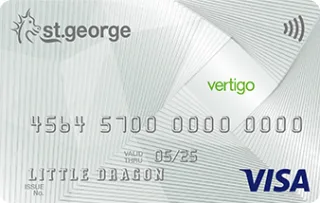
Balance transfer rate of 0% p.a. for the first 28 months
A low ongoing annual fee
Shopping cashbacks through ShopBack
Competitive purchase interest rate of 13.99% p.a.
Additional cardholder at no extra cost
Charges a one-time 1% balance transfer fee
Balance transfer rate reverts to 21.49% p.a. at the end of the introductory period
No rewards program, travel perks and insurance covers
Why we like it
The 13.99% p.a. variable interest rate on purchases is much lower than the average standard credit card interest rate in Australia (currently 20.07% p.a.)
Long 0% p.a. balance transfer offer for 28 months (with a 1% BT fee), which can help you save on interest and pay off existing debts faster.
Unlike many other cards, you still get interest-free days on purchases when you have a balance transfer.
Mobile payments through Apple Pay, Google Pay and Samsung Pay.
Top pick for low rate
Citi Clear Card - Exclusive Offer
0% Balance Transfer Offer & First-Year Annual Fee Discount
Balance transfer reverts to a high 22.24% p.a. cash advance rate
$99 annual fee after the first year
No rewards program or travel insurance
Why we like it
What we like about the Citi Clear Card – Exclusive Offer:
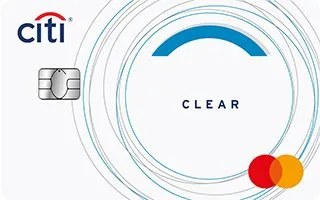
Offers 0% p.a. interest on balance transfers for 24 months, which can help you save on interest and pay off existing debts faster.
Accepts balance transfers from credit cards, personal loans and lines of credit, giving you more ways to consolidate debts compared to some other cards.
The discounted first-year annual fee saves you $50 compared to the $99 annual fee that applies after that.
14.99% p.a. variable interest rate on purchases, which is lower than the average standard credit card interest rate in Australia (currently 19.82%).
Top pick for rewards
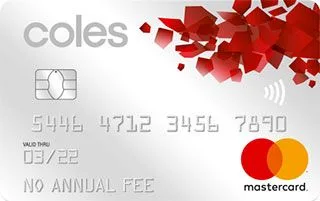
Coles No Annual Fee Mastercard - Bonus Points Offer
You will not get interest-free days on purchases if you’re carrying a balance transfer debt
While most Australian spending earns 1 point per $1, anything over $10,000 in a statement period earns a lower rate of 0.5 points per $1
Why we like it
Offers up to 80,000 bonus Qantas Points, which is enough to redeem 2 return economy reward flights from Sydney to Fiji (not including fees and taxes) or $350 of Woolworths digital gift cards.
Up to 2 Qantas Points per $1 for eligible spending with Qantas and between 0.5 and 1.5 Qantas Points per $1 on other eligible spending. And most everyday spending in Australia would earn 1 Qantas Point per $1 (unless you spent more than $10k in a month).
2 complimentary airport lounge invitations each year and up to 20% off eligible companion fares for domestic flights with Qantas or QantasLink once a year
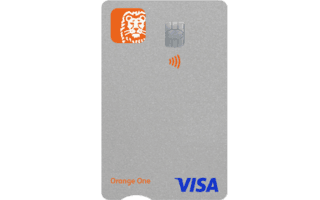
Low variable interest rate of 11.99% p.a. on purchases and cash advances
Must hold an Orange Everyday account or request to open one to receive this card
Several criteria to receive the ATM fee rebate and foreign transaction fee waivers
Why we like it
The ING Orange One Low Rate has a $0 annual fee.
It also includes a rebate on foreign transaction fees for customers with an Orange Everyday account who meet the minimum deposit and spend requirements.
Even with a $0 annual fee and 14.99% p.a. purchase rate, you must still be approved for a $6,000 minimum credit limit.
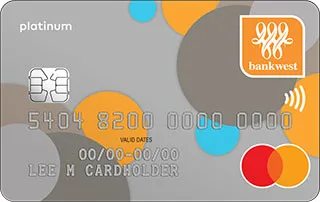
Charges a one-time 3% balance transfer fee
Why we like it
The Bankwest Zero Platinum Mastercard has a $0 annual fee and 0% foreign transaction fees.
It also includes overseas travel insurance for trips of up to 31 days, with no activation requirement and the option to upgrade your cover through Cover-More for a fee.
Bankwest is one of the few providers that offers a digital card you can use straight away once you're approved and activate your account.
🧪 Methodology: How we chose our top picks
To determine the top picks for different credit card categories, Finder’s experts examine over 250 cards in our database every month. We narrow it down to cards available through Finder and analyse them based on the rates, fees, offer details and other factors specific to the category.
In addition to the factors listed, we may consider any additional features or introductory offers that are relevant and have the potential to offer additional value. All our top picks are from credit card brands Finder has a commercial partnership with and may not always be best for you. Based on your situation, you may find certain features to be more or less important, so compare your options before you apply.
If you use a credit card properly, it's a great way to manage your spending, earn reward points or get your existing card debts under control with a balance transfer. But if you find you're struggling to pay it off and getting charged interest, it's time to reavaluate how you're using the card — and whether you need it.
The ideal credit card is different for everyone (which is why there's not a single "best" credit card). But there are a few things that have universal appeal, including:
Low fees and interest rates to help you save on credit card costs
Rewards, travel perks or other extras that you can use to get more value
A long 0% balance transfer period if you want to pay off existing debt without interest
A bank you want to deal with (think good service, a cool app or mobile payments)
Types of credit card offers and how to find the right one for you
There are hundreds of credit cards in Australia for both personal and business spending. These cards can be narrowed down into 5 main categories or "types". Different cards will work for different people. Here's how to find one based on your credit card habits:
If you want to earn points for your spending
If you use your card for everyday spending and want to be rewarded, you could check out frequent flyer, cashback or rewards credit cards that offer extra value per $1 spent. New cards usually offer thousands of bonus points as an incentive for new customers and sometimes discount the annual fee (which can be higher than on some no-frills cards). With these types of cards, always aim to pay off your balance in full every month.
If you only use your credit card for emergencies
This is one of the most common reasons Australians get a credit card, with Finder research showing 41% of Australians got their last credit card for emergencies. When that's the case, a no annual fee card costs you nothing to keep. And if you pay it off in full each month, it could cost you nothing at all.
If you carry a balance from month to month
Carrying a balance from month to month can be handy but also expensive, with the average credit card interest rate now around 20% p.a. A card with a low interest rate (typically around 8–15% p.a.) would save you money in the long run.
If you already have credit card debt
A balance transfer credit card can help you save money and simplify your payments by offering a low or 0% interest rate on debt you move to the new card. Balance transfer offers usually last 6–28 months, giving you some time to pay off your debt without having to pay interest. If you have a few debts, combining them can also help you save on rates and fees.
If you want a credit card for your business
Some sole traders and small business owners will choose a personal credit card for their work spending. But business credit cards offer you more expense management tools and features such as detailed statement breakdowns, automatic feeds for accounting software and cards for employees. They're also more likely to offer rewards for spending with the ATO and other government bodies.
New to credit cards?
If you're not sure what some of the terms on this page mean, you can check out Finder's guide to credit cards for beginners to learn how they work. It also has a comparison of cards typically suited to new cardholders, including low rate, no annual fee and student credit cards.
When I first moved to Australia 9 years ago, I took out an Amex that earned Velocity Points and gave me a solid earn rate of 1.2 points per dollar spent. The card had an annual fee of $375, 2 free lounge passes, a free return domestic flight and 120,000 bonus points and away we went. After Virgin halted many of its international flights – especially to LAX – the novelty of earn rates and lower annual fees was trumped by wanting airline miles I could more easily use. On top of this, there is only a Woolies near my house which means my groceries earn Qantas Points and Amex is not accepted everywhere. Very happy with my ANZ Qantas Visa.
Our comparison tables are completely free to use. We link you directly to the lender's secure application page. Better still, we regularly have exclusive offers that you won't find on any other site.
We're experts
We've researched and rated hundreds of cards as part of our Finder Awards. We've published 200+ guides and our in-house experts regularly appear on Sunrise, 7News and SBS News.
We're independent
Unlike other comparison sites, we're not owned by a bank or lender. That means our opinions are our own and you can compare nearly every credit card in Australia on Finder.
We're here to help
Since 2012, we've helped almost 6 million people find a credit card by comprehensively comparing offers. We'll never ask for your personal information. We're here to help you make a decision.
Frequently asked questions
Mastercard and Visa credit cards are widely accepted across Australia and make up 91.8% of all credit card purchases, according to RBA data. American Express is also accepted at most major retailer stores and many service providers, with Finder analysis showing it added over 194,000 new merchant locations added between January 2017 and December 2022. Diners Club is the only other card network the RBA reports data on but has very limited acceptance compared to Mastercard, Visa and Amex.
The Bankwest Zero Platinum Mastercard was named the Best Travel Credit Card in the Finder Credit Card Awards 2023. It offers no foreign transaction fees, no annual fee and complimentary travel insurance. But when you're comparing credit cards for travel, you should also consider these details:
Before you travel
A rewards or frequent flyer credit card can help you save on flights and travel bookings that you pay for with points.
Getting a credit card from your current bank can make it easier to manage because you'll see your accounts in one place. You could also be able to make repayments easily between your transaction account and the credit card.
But loyalty doesn't always pay. And your bank may not have the best credit card with the features you want. So it's better to compare different brands and choose the one that offers you the most value.
Credit cards with low interest rates and low or $0 annual fees are typically the cheapest, because they help you save on 2 of the biggest potential credit card costs. When you're looking for a cheap credit card also consider:
If you usually carry over a balance from month to month, a lower interest rate will offer more savings compared to a card with a higher rate.
If you pay off your balance each month, an ongoing $0 annual fee means you'll save on account costs and could take advantage of interest-free days on purchases.
When you're comparing cards, consider what you plan to use a credit card for and weigh up the potential costs to find one that's cheapest for you.
If you're focused on earning points through Qantas Frequent Flyer or Velocity Frequent Flyer, a card that earns those points makes the most sense. With some cards, the bonus points alone could be enough to get you a business class flight or holiday.
But a rewards credit card gives you better options if you're a member of a few loyalty programs and want to transfer points between them. These cards also offer more choice if you're more interested in cash rewards and retail goodies.
Low rate credit cards are better if you don't pay your bill in full every month. You'll still have to pay interest on the balance, but it will usually cost you less than a card with no annual fee (and so, a higher interest rate).
A $0 annual fee card is great if you pay as you go or repay everything when it's due to make use of interest-free days on purchases. When combined, these 2 features mean you can effectively pay nothing to use your card.
A 0% balance transfer credit card works well for credit card debt if you can pay it off within 3 years. This is because the 0% introductory rate usually lasts for between 6 and 36 months.
If you want smaller repayments spread out over a longer period of time, personal loans have terms from 1 to 5 years – and some offer up to 10 years. You'll pay interest, but it could make it easier to chip away at what you owe. Personal loans also let you consolidate more types of debts, including from credit cards, other loans and even some buy now pay later debt.
A no interest credit card with a flat, monthly fee can be good if you want to pay off what you buy over time, without being limited to selected retailers (which you sometimes are with Afterpay, Klarna and some other BNPL plans). These credit cards don't usually charge late fees, unlike buy now pay later. They are also better if you want to build up your credit history, because most BNPL plans don't add to your credit report.
But if you mostly shop with the partnered brands and can make all of your payments on time (to avoid late fees), you could use a platform like Afterpay without any costs. And if you already have an account that you're happily using, there's probably no reason to get a credit card – unless you want to build your credit history.
Credit cards with low interest rates, low fees and low or modest credit limits are typically the best options because these features help keep costs down. A low credit limit can also reduce the risk of unmanageable debt.
Some people may also consider no interest credit cards with a flat, monthly fee for their first credit card. These cards are similar to BNPL and have clear, structured repayment details and only offer credit limits between $1,000 and $3,000.
We value our editorial independence, basing our comparison results, content and reviews on objective analysis without bias. But Finder may receive compensation when you click links on our site. Learn more about how we make money from our partners.
2024 Finder Awards winners and finalists
Find out which credit cards have been recognised in this year’s Finder Awards.
The Virgin Australia Velocity Flyer Card was named Best Balance Transfer Credit Card in the 2024 Finder Awards. It consistently had competitive balance transfer offers during the period of analysis, including 0% p.a. on balance transfers for 24 months with no BT fee.
The ANZ Frequent Flyer Black Card has been named the Best Frequent Flyer Credit Card – Qantas for the third year in a row. It had big bonus Qantas Points during the analysis period – and a good earn rate, Qantas Club lounge invitations and travel insurance.
The Virgin Australia Velocity High Flyer won the Finder Award for Best Frequent Flyer Credit Card – Velocity. It had strong scores for bonus point offers, points per $1 spent and annual fee. Other perks include airport lounge passes and a $129 Virgin Australia Flight Voucher.
Illawarra Credit Union’s Low Rate Credit Card won the 2024 Finder Award for Best Low Rate Credit Card. For the analysis period, it scored well for its low 8.99% p.a. interest rate, $0 first-year annual fee and competitive $50 annual fee after that.
Every year the Finder Credit Card Awards recognise Australia's top credit cards, with expert analysis on rates, fees and offers based on 12 months' worth of data. The awards cover categories including balance transfers, travel and frequent flyer rewards – with separate categories for cards that earn Qantas Points and Velocity Points.
As offers change frequently, these cards might not currently have the most competitive deals but you can use them as a benchmark against current offers.
Amy Bradney-George was the senior writer for credit cards at Finder, and editorial lead for Finder Green. She has over 16 years of editorial experience and has been featured in publications including ABC News, Money Magazine and The Sydney Morning Herald.
The National Seniors Credit Card has a low 8.99% p.a. variable interest rate and a $40 annual fee that helps support the organisation. Here’s how its other features compare.
The Wizitcard offers an alternative to traditional credit cards and buy now pay later, with no interest charges, a monthly fee and a virtual account – is it right for you?
If you work in the Australian health sector, this card offers an introductory rate of 7.9% p.a. on purchases and balance transfers for 6 months and an ongoing $0 annual fee. Is it right for you?
When you apply for a credit card online, you could receive a response within 60 seconds. Find out how you to find a card that you're eligible for and increase your chances of approval.
Important information about this website
finder.com.au is one of Australia's leading comparison websites. We are committed to our readers and stands by our editorial principles
We try to take an open and transparent approach and provide a broad-based comparison service. However, you should be aware that while we are an independently owned service, our comparison service does not include all providers or all products available in the market.
Some product issuers may provide products or offer services through multiple brands, associated companies or different labeling arrangements. This can make it difficult for consumers to compare alternatives or identify the companies behind the products. However, we aim to provide information to enable consumers to understand these issues.
We make money by featuring products on our site. Compensation received from the providers featured on our site can influence which products we write about as well as where and how products appear on our page, but the order or placement of these products does not influence our assessment or opinions of them, nor is it an endorsement or recommendation for them.
Products marked as 'Top Pick', 'Promoted' or 'Advertisement' are prominently displayed either as a result of a commercial advertising arrangement or to highlight a particular product, provider or feature. Finder may receive remuneration from the Provider if you click on the related link, purchase or enquire about the product. Finder's decision to show a 'promoted' product is neither a recommendation that the product is appropriate for you nor an indication that the product is the best in its category. We encourage you to use the tools and information we provide to compare your options.
Where our site links to particular products or displays 'Go to site' buttons, we may receive a commission, referral fee or payment when you click on those buttons or apply for a product. You can learn more about how we make money.
When products are grouped in a table or list, the order in which they are initially sorted may be influenced by a range of factors including price, fees and discounts; commercial partnerships; product features; and brand popularity. We provide tools so you can sort and filter these lists to highlight features that matter to you.
Please read our website terms of use and privacy policy for more information about our services and our approach to privacy.