There are a number of things you can do to improve your credit score quickly and over a longer period of time.
You can start by consistently repaying your debts on time, paying off any missed or late payments and being careful about managing and minimising your existing debts.
However, improving your credit score is also a long-term process and it's important that you continue to take steps to ensure your score doesn't decrease over time.
9 ways to improve your score
Follow these steps and you'll increase your credit score in no time:
You can't improve your credit score if you don't know what it is and don't understand what it means.
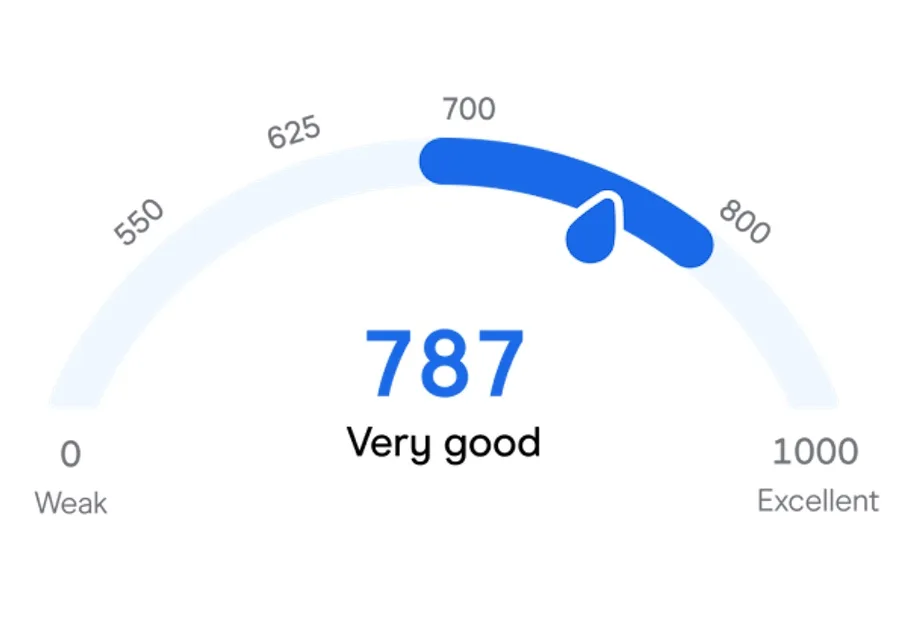
You can check your credit score for free through Finder. It takes a couple of minutes and then you'll know exactly what your score is. You'll get a score between 0 and 1,000. The higher the better.
Along with the score you'll get your credit report, which contains:
A 24-month history of your loan repayments, including late payments or defaults.
Information about your credit accounts (loans and credit cards).
Any enquiries or requests made by lenders for your credit report in the last 5 years.
Any bankruptcies or court judgements in your name.
Once you have your credit score you can identify the best ways to increase it.
Finder survey: Have many Australians have taken steps to improve their credit score?
Response
No
68.8%
Yes
31.2%
Source: Finder survey by Pure Profile of 1016 Australians, December 2023
2. Correct any errors in your credit report
Look at the details contained in your credit report. If it all looks accurate, then jump to step 3. But if you find any errors you can get them corrected and your credit score should increase pretty quickly.
Here are some examples of possible errors:
Incorrect personal information
Incorrect missed payments or defaults
An unpaid debt you were never notified about
Enquiries made on your behalf for credit you never applied for
You'll need some personal identification, plus the report, the specific detail you're challenging and evidence of the error.
3. Pay off late payments and defaults
You should fix the biggest issues dragging your credit score down as soon as possible. Red marks on your credit report are usually:
Missed payments. If you've missed a payment on a bill by more than 14 days it is recorded on your credit report for 2 years.
Defaults. If a repayment is more than 60 days overdue and the amount is $150 or more, a default is recorded in your credit report. Defaults stay on your report for 5 years.
Prioritise paying off any outstanding debts, especially a default. Make sure you pay any missed payments before the 14 days if possible.
Paying off an outstanding payment looks better on your credit report but the missed payment or default is still recorded.
4. Make regular repayments on your debts
It sounds obvious but don't miss a payment on your credit card or loan. Pay off at least the minimum on your credit card before it's due.
🔥 Hot tip
Set up direct debits so payments are made automatically. Just make sure you have money in the bank account to cover the payment.
Good credit means going into debt
You might think someone who has never had a cent of debt to their name would have a perfect credit score. But that's not the case.
To prove you are a reliable borrower you need to actually have a history of managing debt responsibly.
If you've never had a loan or credit card before it can be hard to show this. So you might actually be better off applying for a credit card with your bank as a first step.
Just make sure:
You keep the credit limit low
You actually use the card to buy things
You make regular repayments on time
The card has low fees
5. Pay your bills on time
Unfortunately your credit report doesn't necessarily record all the years you've spent paying your phone, internet, electricity and gas bills on time. Bills are not credit.
But if you've missed a bill payment by more than 14 days it will negatively affect your score.
So make sure you pay your bills on time. Setting up direct debits for your bills (or even automatic reminders) is the easiest way to do this.
6. Lower the limit on your credit card
If you already have a credit card and you're making repayments on time, you can further improve your credit score by lowering the card limit.
That's the maximum amount you can spend using the card. It's much easier to get into financial trouble with a card that lets you spend $6,000 versus one with a limit of $2,000.
If you don't need to make big purchases on your credit card, lower your limit.
7. Avoid multiple debts, especially high interest ones
A borrower with a single credit card and a home loan who never misses a repayment is likely to have a strong credit score.
But if you have 3 credit cards and 2 personal loans you'll struggle to improve your credit score even if you never miss a repayment.
Alternatively, prioritising paying off one of the loans completely would help too. A balance transfer credit card can be the best way to roll card debts into one manageable debt.
8. Avoid applying for too many credit products at once
When you apply for a loan or credit card the lender requests a copy of your credit report. This is called a hard inquiry and it can negatively affect your report.
This is because multiple applications for credit in a short time are considered a bad sign.
To avoid this:
Don't apply for multiple debts at once
Apply for a single credit product from a single provider
Make sure your application is completed correctly and that you're eligible for the product before you apply
🔥 Hot tip
Getting rejected for a credit application hurts your credit score because of the hard inquiry mentioned above. Avoid applying for another credit product until you understand why you got rejected for the first one. Multiple inquiries can harm your credit score even more.
Checking your own credit score is considered a soft inquiry and doesn't affect the score in any way.
Missing BNPL repayments will hurt your credit score. And some BNPL providers make a credit enquiry when you sign up, meaning the company takes a look at your credit report. This can impact your credit score too.
More useful tips to get a better credit score
Time heals all credit wounds
If you've had a very bad run with your finances – missed payments, defaults, a bankruptcy – then time is your friend.
In Australia, defaults stay on your credit report for 5 years. Missed payments stay for 2. If you were declared bankrupt, the bankruptcy stays on your report for 2 years from the end date or 5 years from the date you became bankrupt (whichever of the 2 is later).
So while all the tips we've outlined above are very useful, for people with terrible credit the passage of time also helps a lot. Just avoid getting into more credit trouble in the meantime.
Credit repair companies
There may be mistakes on your credit report you can fix. And there are companies that offer credit repair services who can fix those for you.
But these companies can charge high fees and are often just doing things you can easily fix yourself, for free.
Keep a good credit card
Paying off debts completely is good financial advice. But it's often worth keeping a credit card you rarely use and have always paid off on time. This card is a good example of your creditworthiness.
Just make sure you keep the limit as low as possible.
Get help
If you're struggling to make repayments and need financial help you have options:
Talk to your utility and credit providers. Before you miss a payment talk to your providers. They have hardship support schemes and payment plans available for customers.
Get free financial counselling. The National Debt Helpline has free financial counsellors you can speak to on 1800 007 007.
What's the best way to improve a bad credit score?
Here are the 3 key steps you should take today to boost your score:
Pay off any outstanding debts or overdue bills.
Make sure your credit report is accurate
Consolidate your debts and loan accounts
How do I improve my credit score fast?
Unfortunately there is no quick fix or shortcut to improving your credit score. If you have a poor score, it can often take time before you see a huge improvement in your credit rating.
However, by consistently following the steps above you should see your score gradually increase.
One exception may be if you have multiple errors in your credit report that are harming your score. Getting these corrected and removed from your report may have an immediate impact on improving your credit score.
Finder helped me improve my credit score, and find the best credit card and high interest saving account.
Jose, VIC
Understanding my credit score and where my expenses go has helped me spend less on material items and save more to set me up for later in life.
Mikayla, SA
Finder has been super helpful for me to run a credit score check, which I've never done before, and find out where I'm sitting financially – thank you!
Tom, SA
Stay on top of your credit score
Make it easier to track and improve your credit score with the free Finder app. Pop in your phone number below to get your download link.
Richard Whitten is a money editor at Finder, and has been covering home loans, property and personal finance for 6+ years. He has written for Yahoo Finance, Money Magazine and Homely; and has appeared on various radio shows nationwide. He holds a Certificate IV in mortgage broking and finance (RG 206), a Tier 1 Generic Knowledge certification and a Tier 2 General Advice Deposit Products (RG 146) certification.
The average Australian has a "very good" credit score according to Finder analysis. Here's how credit scores are categorised in Australia, and how to check yours.
Credit scores are recognised in many countries, but can be calculated very differently. Find out how the USA, UK, China, India and Canada score credit, and how Australia's system compares.
I have a credit card for $1k and a personal loan of $53k which I used to start my business. Now my business has generated me a good amount of cash flow, If I pay about $20k back to my loan, would that increase my credit score? Or would I need to fully pay my loan off in order to see a better credit score? And if I only pay $20k, would I be eligible to apply for another business loan? Thanks.
Ps. I love your services.
Hi Luis, A number of things can impact your credit score. We know that credit scores tend to increase when a credit facility is closed altogether; reducing the credit limit can also have a positive effect. Making payments on time also contributes towards positive credit reporting. Overall, it’s hard to say with certainty what impact repaying $20k as lump sum would have.
As for obtaining another loan, your eligibility depends on several factors including your income, expenses, how long the business has been operating etc. There are a few options you could explore, such as consolidating your personal loan and credit card into one new personal loan for a higher amount to access new funding, then closing your existing 2 accounts.
Paying off an existing debt should have a long-term impact. However, other factors influence your credit score so you might not see an immediate change in your score even once that debt is repaid.
Hey I’m just in need of emergency funds of 250. My credit score is just below average like by the smallest bit.
Does anyone know where I could get a apporval for this amount ASAP. Thanks.
If a have a “very good” score of 760, how do I make it excellent like 850? I have never missed schedule payments or defaulted any payments etc. How to improve Credit Score which increase the chance in excelance report of credit? Please help
Congratulations on your score of 760. There are several things that you can do to improve your credit score.
It sounds like you’re already paying your bills on time. To try and improve your credit score, you can look at decreasing the limits on any credit cards you own. Also, consider increasing the frequency of your payments to pay off any loans or credit cards quicker.
A ‘hard enquiry’ will show up on your report whenever you apply for a new credit product. These only become concerning when there are many hard enquiries over a short period. Try and limit any applications for credit to one every few months.
When you check your credit score and report with Finder, carefully review each entry against your records and ensure your report accurately reflects your history. If you’ve found any incorrect listings in your credit report, contact your creditor or the credit reporting bureau to investigate this.
How likely would you be to recommend finder to a friend or colleague?
0
1
2
3
4
5
6
7
8
9
10
Very UnlikelyExtremely Likely
Required
Thank you for your feedback.
Our goal is to create the best possible product, and your thoughts, ideas and suggestions play a major role in helping us identify opportunities to improve.
Important information about this website
finder.com.au is one of Australia's leading comparison websites. We are committed to our readers and stands by our editorial principles
We try to take an open and transparent approach and provide a broad-based comparison service. However, you should be aware that while we are an independently owned service, our comparison service does not include all providers or all products available in the market.
Some product issuers may provide products or offer services through multiple brands, associated companies or different labeling arrangements. This can make it difficult for consumers to compare alternatives or identify the companies behind the products. However, we aim to provide information to enable consumers to understand these issues.
We make money by featuring products on our site. Compensation received from the providers featured on our site can influence which products we write about as well as where and how products appear on our page, but the order or placement of these products does not influence our assessment or opinions of them, nor is it an endorsement or recommendation for them.
Products marked as 'Top Pick', 'Promoted' or 'Advertisement' are prominently displayed either as a result of a commercial advertising arrangement or to highlight a particular product, provider or feature. Finder may receive remuneration from the Provider if you click on the related link, purchase or enquire about the product. Finder's decision to show a 'promoted' product is neither a recommendation that the product is appropriate for you nor an indication that the product is the best in its category. We encourage you to use the tools and information we provide to compare your options.
Where our site links to particular products or displays 'Go to site' buttons, we may receive a commission, referral fee or payment when you click on those buttons or apply for a product. You can learn more about how we make money.
When products are grouped in a table or list, the order in which they are initially sorted may be influenced by a range of factors including price, fees and discounts; commercial partnerships; product features; and brand popularity. We provide tools so you can sort and filter these lists to highlight features that matter to you.
Please read our website terms of use and privacy policy for more information about our services and our approach to privacy.


I have a credit card for $1k and a personal loan of $53k which I used to start my business. Now my business has generated me a good amount of cash flow, If I pay about $20k back to my loan, would that increase my credit score? Or would I need to fully pay my loan off in order to see a better credit score? And if I only pay $20k, would I be eligible to apply for another business loan? Thanks.
Ps. I love your services.
Hi Luis, A number of things can impact your credit score. We know that credit scores tend to increase when a credit facility is closed altogether; reducing the credit limit can also have a positive effect. Making payments on time also contributes towards positive credit reporting. Overall, it’s hard to say with certainty what impact repaying $20k as lump sum would have.
As for obtaining another loan, your eligibility depends on several factors including your income, expenses, how long the business has been operating etc. There are a few options you could explore, such as consolidating your personal loan and credit card into one new personal loan for a higher amount to access new funding, then closing your existing 2 accounts.
Hope this helps!
I currently have Debt Agreement which will expires in January 2024. Will this fix my credit score?
Paying off an existing debt should have a long-term impact. However, other factors influence your credit score so you might not see an immediate change in your score even once that debt is repaid.
Hey I’m just in need of emergency funds of 250. My credit score is just below average like by the smallest bit.
Does anyone know where I could get a apporval for this amount ASAP. Thanks.
Hi Keiarna,
This guide about PayDay Loans may be helpful.
Also, if you need help to manage your debt, the National Debt Helpline provides a free and confidential service to help you get back on track.
If a have a “very good” score of 760, how do I make it excellent like 850? I have never missed schedule payments or defaulted any payments etc. How to improve Credit Score which increase the chance in excelance report of credit? Please help
Hi there,
Congratulations on your score of 760. There are several things that you can do to improve your credit score.
It sounds like you’re already paying your bills on time. To try and improve your credit score, you can look at decreasing the limits on any credit cards you own. Also, consider increasing the frequency of your payments to pay off any loans or credit cards quicker.
A ‘hard enquiry’ will show up on your report whenever you apply for a new credit product. These only become concerning when there are many hard enquiries over a short period. Try and limit any applications for credit to one every few months.
When you check your credit score and report with Finder, carefully review each entry against your records and ensure your report accurately reflects your history. If you’ve found any incorrect listings in your credit report, contact your creditor or the credit reporting bureau to investigate this.
I hope this helps.
Cheers.
I would like something cleared on my credit report that has been paid out as this is affecting my credit rating