Expecting a new baby can be a less daunting experience if you know that your finances are in order. A tiny new member of the family can mean losing a large portion of the household income, but it also means that additional costs and expenses need to be paid at the same time.
The best way to avoid the financial shock of these costs is to ramp up your savings and prepare your household budget for the changes before they arrive.
How to prepare a budget for your baby when you're expecting
Starting point snapshot
In order to really comprehend what your financial situation will look like after your baby is born, it's vital to have a clear idea of where you stand right now. For this reason, you should sit down and write out your current household income and expenses. Include any form of income that currently makes its way into the house and be brutally honest about your expenses.
Think about what you plan to do once the baby is born. Do you plan to stop working for a time, or cut back to just part-time hours? Either of these options is going to affect your income, so you need to plan how you'll manage financially during those times.
If you're currently getting by just fine with your expenses, that's pretty good news for you. But if your expenses are really eating into your income so that things get a little tight each month, it's time to look at some areas within your expenses list where you might be able to cut back a little.
Trimming the budget
Before baby is born, it's quite normal for many people to spend money on things they want. However, once your new family member arrives your costs will change dramatically.
Remember the true reason why you're saving:
Remember, the point of cutting back on your spending now is to make room for the additional costs you'll incur once the baby arrives. Work on things you can reduce right now. This might mean calling your phone or internet providers and negotiating for better plans or calling your insurance provider and negotiating for reduced premiums.
It could also mean cutting down on those meals out at swanky restaurants or those few after-work drinks for a while, just to get the budget under your control again.
Finder survey: At what age do Australians open their child's first bank account?
Response
1
17.93%
5
15.74%
10
13.15%
0
7.97%
12
7.57%
15
5.68%
16
4.18%
6
3.98%
8
3.69%
13
3.29%
18
3.09%
14
2.99%
2
2.99%
3
1.49%
7
1.39%
4
1.1%
9
0.9%
11
0.6%
17
0.5%
20
0.2%
26
0.2%
30
0.2%
34
0.2%
45
0.2%
100
0.1%
19
0.1%
21
0.1%
23
0.1%
35
0.1%
36
0.1%
42
0.1%
90
0.1%
Source: Finder survey by Pure Profile of 1004 Australians, December 2023
When you've isolated some areas where you can trim your spending, it's time to add in baby costs. Think about expenses like buying nappies and baby formula and baby clothing and toys. Add in those items you need to buy to get the nursery organised, such as a crib and changing table. What about a car seat and a stroller?
No matter how realistic you think you're being with your baby costs, add a little more on anyway. Even the most frugally vigilant parents end up spending a lot more than they realise on baby stuff.
Of course, it's completely normal for most parents to want to give their new baby the best of everything. But no matter whether your new arrival is living in total luxury or being raised on the tightest budget, they really will still thrive without that Gucci stroller or those Armani-branded booties.
Savings plan
No matter when your baby is due, it's never too late to start a savings plan. Even cutting a few dollars out of your expenses each week can be a great way to get started.
The whole idea of your savings plan is to help you find the cash you need to start buying baby supplies and furnishings. Depending on how much you're able to save, you might also want to put aside a bit extra to help out with living expenses after baby is born.
The key to getting your savings plan right is to work out approximately how much cash you think you'll need to buy all your baby supplies. Then work out ways you can potentially save money on your purchases and get the same items at a reduced cost.
Some larger items can be put on lay-by and paid off over the term of your pregnancy. Other items may be delayed until your due date is much closer.
Once you have an estimated figure in mind for how much you need, it's time to work out how much you can trim out of your current budget. Every dollar you can save on current expenses can then be put towards building up your baby fund.
There's also the issue of covering the bills and the mortgage payments. If you already know you're going to lose some of your regular household income, it's important to start saving as soon as you can. The more you can put aside, the easier you'll find things financially when you do finally take that maternity leave.
We'll look at some expenses you might want to think about in more detail throughout this article.
The key to working through how much money you need for baby's things is to be realistic about what you'll use regularly, what's mandatory and what you could potentially do without until later.
If you're like most parents, you'll want to start stocking the nursery with baby things before the due date even gets close to arriving. This is a great way to be sure that everything's ready and waiting for you the moment you get home from the hospital.
Let's look at some of the things you'll need in more detail:
Infant car seat: From the moment you leave the hospital, you need a way to get baby home safely. This means fitting a car seat into the car. You'll need to buy a good quality rear-facing infant car seat that is likely to see you through for at least the first couple of years. This seat is designed to keep your baby safe, so it's not always a good idea to go bargain hunting for a major purchase like this. Look for safety and durability.
Stroller: When it's time to head out of the house, you want to be sure baby is coming with you. Strollers can range in price dramatically from those cheap flimsy department store-types, right up to those crazy dune buggy-looking monsters. Choose one that suits your needs, but also be sure it's comfortable for baby. You'll be the one collapsing the pram and hoisting it up into the car wherever you go, so be sure you choose one that is easy to operate and not big enough or heavy enough to damage your back.
Crib: As with most things, you'll find a huge selection of cribs in a wide range of prices and styles. If you're planning on using the crib again as your family continues to grow, you might want to look for a good-quality crib that is durable and likely to last the long term.
Changing table: Setting up a spot in the baby nursery specifically for changing nappies can make your life as a mum a lot easier. You can store nappies and talcum powder and other supplies you need nearby for convenience and know where everything is.
Bassinet or cot: Many parents prefer to have baby sleeping in the same room with them for the first few weeks after coming home from the hospital. This is mostly because infant babies need to feed so regularly in those early weeks that it's more convenient to have baby close by. If you choose a portable bassinet, you can also move it easily from room to room. This allows baby to sleep in the same room as you, no matter where you are in the house.
High chair: As your baby grows, you'll need somewhere for him or her to sit safely while you're preparing meals. Of course, your high chair will also become baby's dining table as solid foods are introduced, so look for something that will last.
Baby bath: As soon as your baby's umbilical cord heals up properly, you're able to start washing baby in his own tub. A baby bath is practical enough to move to wherever is convenient for you. It's also much safer for baby than trying to wash in an adult-sized bath.
Clothing: The sheer variety and range of baby clothing available is staggering. You're going to need sleeping clothes and one-piece outfits and undergarments and mittens and socks and booties and … the list goes on and on. Think carefully about what items you buy. Remember, a newborn baby is going to look lost in those tiny 0000 sized clothes for all of a week. Then it's time to start looking at slightly larger sizes for another month or two, before it's time to upsize yet again. Babies do grow very quickly, so think about buying only what you need in the really tiny infant sizes. Besides, some babies grow much faster than others, so you might find you need larger sizes sooner than you expected. Regardless, do you really need four winter outfits in tiny infant sizes when your baby is due in summer? Take time to really think about what you need before you spend.
Baby linen: Baby is going to need several changes of linen handy, so consider stocking up on crib sheets, a quilt or blanket, baby pillows and pillowcases, swaddling blankets, baby towels and washcloths.
Baby supplies
Buying baby supplies feels like a never-ending money pit to most parents. But there are some things you can buy before baby is even born that can make your life easier for the first few weeks.
Here are some items you can start to stock up on before baby comes home:
Nappies: Disposable nappies are incredibly convenient and really handy to have. Unfortunately, they're not cheap.
Nappy disposal bags: You're going to go through a lot of these, so there's no harm in stocking up. While you're at it, think about a small rubbish bin with a lid to put next to the changing table too.
Change table supplies: You're going to need a handy supply of baby wipes, Vaseline, nappy rash cream and baby powder.
Bottles and formula: You'll need to buy at least four, but more likely six, small baby bottles during the first few months. As baby grows, you'll need to upgrade to larger-sized bottles.
Dummies: Okay, so they're technically called 'baby pacifiers', but we all know them as dummies. Some babies love them and others despise the whole idea. It's still a good idea to have some handy in different sizes and types, just in case.
Bath supplies: Stock up on supplies like baby shampoo, baby soap, baby oil, Vaseline and moisturising cream.
What other expenses do you need to prepare for?
Most people start looking at prices of prams and cots but often forget about some of the other expenses they might incur:
Medical bills: Most people automatically assume their medical expenses will all be covered by Medicare. What you may not realise is that Medicare only covers you for costs you incur while you're in hospital. Think about how many visits to your GP or your obstetrician you'll need during your pregnancy. How many ultrasound scans will you have? How many blood tests?
If you have private health cover, you can't just upgrade when you find out you're pregnant, as the majority of insurers have a 12-month waiting period before they'll issue pregnancy cover. However, if you've been planning your family for a while and you've already upgraded, you should find that many will cover some of the in-hospital obstetrics costs and ultrasound costs as part of your policy. You may also have private hospital coverage as well, depending on your policy.
How much will you really spend on your new baby in a year?
Did you know it's estimated that most parents spend approximately $10,000 on their baby in the first year? That's a scary thought if you're not prepared for it!
What do you need to sacrifice as a new parent to provide your baby's needs?
The moment you bring your baby home from the hospital, your life will completely change forever. The one thing most new mums agree on that they sacrifice for their baby is sleep.
However, there are also some financial sacrifices you'll need to make for your child. You might find yourself sacrificing those weekend takeaway dinners so you can buy baby new things. You could sacrifice that new pair of shoes you wanted so you can buy baby some new clothes instead.
Every parent is a little different, but you will find that there are things you used to do before baby that you suddenly sacrifice in order to give your child what he or she needs.
What you and your partner can do to minimise expenses on baby stuff
It's really tempting to head out and buy all the fabulous baby stuff in the stores and really deck out that nursery so it looks like something out of a home decorating magazine. Likewise, all the gorgeous little outfits, furnishings and toys available are just tantalising for many parents-to-be. However, it's not always necessary to spend huge amounts to get the things you need.
More importantly, the more you can reduce your baby costs, the more money you'll have left over to pay for other things. This could mean the difference between taking a bit more time off work to spend with baby, or it could mean less struggle financially in those first few months.
Nappies
While disposable nappies are really convenient, you can save a fortune by using cloth nappies instead. These days they're made with Velcro sides, so there's no risk of sticking to baby's skin with a sharp pin and they have handy elastic leg openings, too. Yes, you'll be spending a bit more time washing dirty nappies, but the cost of washing the same things over and over actually ends up significantly cheaper than buying disposables.
Pre-stock the nursery
If you're going to stick to disposable nappies, think about adding one packet of nappies to your shopping list every week or fortnight until baby arrives. You will need a handy stock of really tiny infant sizes, but don't forget to start stocking up on the larger sizes too. You're going to need them.
You can also use the same principle for baby formula, perhaps adding a can of formula to your regular grocery shopping once a month to help you stock up in advance.
Buying a few items to stock up on each time you shop will help to stretch out the cost over a period of months, making it a little more affordable for you.
Baby toys
Some of the baby toys available these days are amazing. However, most kids seriously have more fun playing with empty boxes or banging a wooden spoon on the bottom of a saucepan. Think carefully about what toys you buy your baby before the age of one. Some of those really awesome toys can be incredibly expensive and your baby really doesn't understand them yet anyway.
Check what benefits you're entitled to
Once your baby is born, you may be eligible for some government-assisted benefits. This may include receiving Family Allowance A and Family Allowance B payments for some people. It may include paid maternity leave, either via Centrelink or via your employer.
While these amounts may not replace your entire income, they're certainly going to help with your budget during those first few months.
Put spare change to good use
No matter how much some people tighten their budgets, they still just can't seem to save money. Bills arrive unexpectedly or something comes up that drains whatever cash they had put aside.
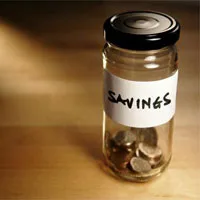
You can manage to save quite a bit of extra cash by putting your spare change into a jar. It sounds so trivial, but in reality you can accumulate a nice amount of cash this way. Just be sure you take your change into the bank and deposit it into an interest-bearing account regularly. It's better in the bank earning interest than sitting in the jar trying to tempt you to spend it, anyway.
Reduce debts
One of the biggest expenses in almost every household is making repayments on outstanding debts. If you're serious about keeping your expenses down to a minimum before baby arrives, you need to look at ways to reduce your debt levels.
Think about this: your credit card repayments are calculated as a percentage of the balance owing. If you can reduce that balance, the repayment amounts also drop accordingly. This can be a great way to extend your budget before baby comes home from the hospital.
Look for ways you can make as many extra payments off credit cards, personal loans or mortgages before the big day. Every dollar paid off those debts is going to help your financial situation once your baby arrives.
The whole point of trying to keep your baby expenses under control is to be sure you stay in control of your finances. This can be crucial, especially if you know your household income is going to be reduced once the baby is born.
Track your money with real-time and reduce your bills with the Finder App
How family and friends can help you budget for baby's needs
It's quite normal for friends and family to start buying baby gifts the moment they hear the exciting news. However, if you really want to minimise your baby expenses, perhaps a subtle suggestion or two about things you need could help.
You can suggest that friends limit gifts to baby supplies you know you'll need, or ask them to put together gift baskets filled with smaller items, like dummies or bottles. This will help to cut down how much you spend on those items.
Besides, you're likely to have friends who already have kids. They might be very happy to hand down any clothes and toys they don't use any more.
You also have the option of throwing a baby shower or perhaps even a friend or family member will arrange one for you. This is a great opportunity for them to hand over lots of baby goodies and toys that can help you out.
How to stick to your budget when having a baby
Let's be honest: even the most sensible and frugal parents-to-be can get carried away decking out a nursery for a new baby, even after taking the time and effort to create a budget.
You should already have worked out how much money you have to work with right now and how much that will change after the baby is born. You should also know what your expenses are and how they'll be affected.
Ideally, you should also have created a savings plan and worked out how you'll cope financially once your income alters.
Now it's time to work out how you're going to stick to those plans.
Keep the budget with you
There are some really handy smartphone apps that help you control your budget. If you develop a habit of entering in everything you spend while you're still out and about, you won't have to try and remember or guess how much it was later. You'll be able to see your tally right away, which will show you how much you have left to spend for the week. Besides, every time you record your spending, your mind should automatically start questioning whether that purchase is really necessary. It's a great way to reduce impulse shopping.
Pay yourself first
Most people don't really understand what this means, but it's important. If you've worked out your budget already and you know exactly how much you should have left over to put into savings, pay this amount of money into your savings account first. The rest of your income goes towards your bills and expenses.
Challenge yourself
If your goal is to put away $50 in savings each fortnight, challenge yourself to see if you can find ways to increase that amount even a little bit. This might only be a few extra dollars for the change tin. It might be cutting out a cup of coffee and adding an extra $5. No matter how much it is, make it fun and find ways to challenge yourself to exceed your goals.
Cost cutting
Develop some valuable cost-cutting habits and use them to help you reduce your expenses. Think about how much you pay for the things you already use and see if other providers are offering better value for money or cheaper alternatives. Keep an eye on the catalogues that arrive in the mailbox and watch for sales on items you normally buy.
Cash only
If you know your budget only allows for $150 for grocery shopping, actually withdraw that amount of cash and leave the credit cards at home. You'll be surprised how much more careful you are with your grocery choices when you know you're stuck to a cash-only limit.
Remove temptation
One of the biggest killers for any budget is the availability of easy credit, so remove that temptation. Leave the credit cards at home when you shop. Make a deal with yourself that you're only going to pay for things with cash or from your savings. Make it hard for yourself to give in to those impulse purchases.
How long should I take off work for maternity leave?
The amount of time you take off work is entirely dependent on your choices for your family and your individual financial situation. If you've managed to put aside enough savings to cover several months' worth of living expenses and rent or mortgage payments, you may find you can afford to remain at home with baby longer. Likewise, you may also have the option of extending your paid maternity leave if you get your employer to agree to twice the leave time at half the pay rate. These are things you'll need to discuss with your employer and potentially with Centrelink.
How long does parental leave pay last?
You may be eligible to receive financial support through Centrelink's Department of Human Services for up to a maximum of 18 weeks. They call this payment 'parental leave pay' and you will need to pass their eligibility and work tests before payments will be made. In some cases, your employer may pay this directly to you.
How much will I get from parental leave pay?
If you pass the eligibility test for parental leave pay, you should receive $622.10 per week for up to 18 weeks. It's important to discuss your financial situation with Centrelink, as you may also be entitled to other payments that could include Family Tax Benefit and Parenting Payments.
Do I have to pay tax on money I get from parental leave pay?
Yes. Your parental leave payments are taxable and will need to be declared to the Australian Taxation Office.
What if my employer already offers paid maternity leave?
If your current employer already offers a period of paid maternity leave as part of your employment agreement, you have some options. You can choose to take your normal paid maternity leave first and then extend your leave to include a period of unpaid maternity leave. The unpaid portion of your leave can be funded by parental leave pay from Centrelink if you qualify for those payments. You do need to apply for your payments within 12 months of beginning your maternity leave. Alternatively, you can elect to receive both payments at the same time.
What about dad and partner payments?
Yes, it's true: the Department of Human Services at Centrelink may offer a two-week payment for new dads who want to take some time off work to be at home with the new baby and support the new mum. During that two-week period, the supporting dad or partner may be eligible to receive $622.10 per week, subject to passing the eligibility test.
Shirley Liu is Finder's global program manager. She was previously the publisher for banking and investments and has also written comparisons for energy, money transfers, Uber Eats and many other topics. Shirley has a Master of Commerce and a Bachelor of Media, Journalism and Communications from the University of New South Wales. She is passionate about helping people find the best deal for their needs.
Wondering how your grocery bill stacks up to your neighbour? We break down the cost of food in Australia, and how much we’re spending by state, lifestage and household size.
Looking for alternative investments? With a ROI of up to 3,593% lego may be worth considering. Read on to find out which lego sets are worth the investment.
How likely would you be to recommend finder to a friend or colleague?
0
1
2
3
4
5
6
7
8
9
10
Very UnlikelyExtremely Likely
Required
Thank you for your feedback.
Our goal is to create the best possible product, and your thoughts, ideas and suggestions play a major role in helping us identify opportunities to improve.
Important information about this website
finder.com.au is one of Australia's leading comparison websites. We are committed to our readers and stands by our editorial principles
We try to take an open and transparent approach and provide a broad-based comparison service. However, you should be aware that while we are an independently owned service, our comparison service does not include all providers or all products available in the market.
Some product issuers may provide products or offer services through multiple brands, associated companies or different labeling arrangements. This can make it difficult for consumers to compare alternatives or identify the companies behind the products. However, we aim to provide information to enable consumers to understand these issues.
We make money by featuring products on our site. Compensation received from the providers featured on our site can influence which products we write about as well as where and how products appear on our page, but the order or placement of these products does not influence our assessment or opinions of them, nor is it an endorsement or recommendation for them.
Products marked as 'Top Pick', 'Promoted' or 'Advertisement' are prominently displayed either as a result of a commercial advertising arrangement or to highlight a particular product, provider or feature. Finder may receive remuneration from the Provider if you click on the related link, purchase or enquire about the product. Finder's decision to show a 'promoted' product is neither a recommendation that the product is appropriate for you nor an indication that the product is the best in its category. We encourage you to use the tools and information we provide to compare your options.
Where our site links to particular products or displays 'Go to site' buttons, we may receive a commission, referral fee or payment when you click on those buttons or apply for a product. You can learn more about how we make money.
When products are grouped in a table or list, the order in which they are initially sorted may be influenced by a range of factors including price, fees and discounts; commercial partnerships; product features; and brand popularity. We provide tools so you can sort and filter these lists to highlight features that matter to you.
Please read our website terms of use and privacy policy for more information about our services and our approach to privacy.